Web services are a critical part of modern-day cloud computing due to the fact they permit different packages, structures, and tools to talk to one another over a network. In simple terms, a web service acts as a bridge amongst software programs and allows them to exchange information or use unique capabilities.
Because internet offerings depend on standards, programs using one-of-a-kind programming languages and going for walks on distinct walking structures can talk with every distinct.
What Is a Web Service in Cloud Computing?
A internet company in cloud computing is a software application utility enterprise that allows programs to speak and alternate statistics over a network, normally the use of significant internet technology.
For instance, a web buying software may want a fee provider. Instead of building a whole rating system itself, the software can communicate with a rate issuer through an API or internet company.
Similarly, a cloud software program can also talk with a storage provider to function or download documents.
Client Application → Internet/Network → Web Service → Cloud Resource
The purchaser sends a request, the net carrier methods that request, and the corporation returns a response.
Why Are Web Services Important in Cloud Computing?
Cloud computing includes many independent programs and offerings going for walks collectively. Web services offer a standardized manner for the components to communicate.
They are useful because of the fact they help interoperability among different systems and programming languages. Web services can also assist companies in getting other programs from reusable services rather than developing each feature from the start.
For instance, software written in Java can communicate with a company application using Python or any other technology if both systems use a compatible internet-agency interface.
How Do Web Services Work?
A common internet-enterprise interaction includes a purchaser and a provider agency.
The consumer software program sends a request to the service. The request consists of facts about what the patron wants to accomplish. The net provider gets the request, performs the desired operation, and sends a response.
A simplified technique looks like this:
- The customer sends a request.
- The request travels through the network.
- The internet provider receives and processes the request.
- The provider communicates with the favored cloud aid.
- The provider generates a response.
- The provider responds once more to the customer.
For example, a weather application may send a request for the current weather of a specific metropolis. A weather carrier processes the request and returns the relevant facts to the software.
Types of Web Services in Cloud Computing
The essential strategies typically stated in internet offerings are SOAP-based totally absolutely internet services and RESTful net services.
SOAP Web Services
SOAP stands for Simple Object Access Protocol. It is a messaging protocol usually related to XML-primarily based, absolutely verbal exchange.
SOAP provides a framework for converting messages among applications. It can work with particular underlying transport protocols, even though HTTP is commonly used.
SOAP services are regularly used wherein formal contracts, dependent messaging, and commercial business enterprise-level necessities are vital.
RESTful Web Services
REST stands for Representational State Transfer. Unlike SOAP, REST is an architectural style in preference to a messaging protocol.
RESTful services normally use HTTP methods together with:
| HTTP Method | Common Purpose |
|---|---|
| GET | Retrieve data |
| POST | Create or submit data |
| PUT | Update data |
REST services are substantially used for internet and cloud APIs due to the fact they can use the triumphing talents of HTTP and are normally lightweight.
SOAP vs REST Web Services
SOAP and REST have outstanding traits.
| Feature | SOAP | REST |
|---|---|---|
| Type | Protocol | Architectural style |
| Common Data Format | XML | JSON, XML, and others |
| Complexity | Generally higher | Generally simpler |
| Communication | Message-based | Resource-based |
| HTTP Methods | Not the main design principle | Central to the approach |
| Typical Use | Enterprise integrations | Web and cloud APIs |
| Flexibility | More structured | More lightweight |
The preference between SOAP and REST relies upon the software application’s necessities, protection needs, current infrastructure, and integration environment.
Main Components of Web Services
Traditional web service architecture includes numerous critical technologies.
XML
XML stands for Extensible Markup Language. It provides a set layout for representing and changing statistics.
SOAP web services generally use XML for messages.
SOAP
SOAP offers a standardized messaging mechanism for communication among programs. It defines how structured messages can be exchanged amongst a customer and a service.
WSDL
WSDL stands for Web Services Description Language.
It describes the interface and operations presented by the resource of a web service. A customer can use the provider description to recognize the manner to speak with the company.
UDDI
UDDI stands for Universal Description, Discovery and Integration.
It was designed as a mechanism for publishing and discovering internet offerings. Traditional net-service architecture usually discusses UDDI alongside SOAP and WSDL.
Modern cloud systems frequently depend more intently on API documentation, service registries,, anplatform-specificse discovery mechanisms opposedrse to traditional UDDI.
Characteristics of Web Services
Web services have numerous developments that make them useful for cloud computing.
Platform Independence
An internet company can allow applications running on particular operating systems to talk.
Language Independence
Applications written in distinct programming languages can engage thru a common provider interface.
Interoperability
Web offerings help unique software application systems exchange information through the use of standardized communication strategies.
Reusability
A service can be utilized by more than one applications in location of being recreated one after the other for every software application.
Loose Coupling
The patron usually desires to understand the manner to engage with the provider in the area of the way the issuer is internally implemented.
Network Accessibility
A web service may be made available over a network, allowing far-flung programs to access its functionality.
Advantages of Web Services in Cloud Computing
Web services provide numerous advantages to organizations and developers.
Easy Application Integration
Different programs can communicate without requiring them to use the same programming language or working device.
Reduced Development Effort
Organizations can reuse existing offerings rather than developing each feature from scratch.
Scalability
Cloud-based services can regularly scale with application needs. Cloud environments are designed to provide resources dynamically and on demand.
Cost Efficiency
Organizations can use present cloud offerings in location of retaining separate infrastructure for every software program.
Better Flexibility
Applications can be divided into smaller offerings, making it much less complex to build and maintain complex structures.
Remote Access
Services may be accessed by using applications over the network, permitting geographically distributed structures to communicate collectively.
Applications of Web Services in Cloud Computing
Web offerings are used in the course of many industries and programs.
| Feature | SOAP | REST |
|---|---|---|
| Type | Protocol | Architectural style |
| Common Data Format | XML | JSON, XML and others |
| Complexity | Generally higher | Generally simpler |
| Communication | Message-based | Resource-based |
| HTTP Methods | Not the main design principle | Central to the approach |
| Typical Use | Enterprise integrations | Web and cloud APIs |
| Flexibility | More structured | More lightweight |
Cloud vendors also divulge many resources via APIs, allowing programs to engage programmatically with cloud infrastructure and offerings.
Web Services and APIs
Web services and APIs are closely associated, but the terms are not exactly equal.
An API, or Application Programming Interface, is an interface that allows software utility components to communicate. A net API is an API accessed over a network using internet technology.
Web offerings are commonly network-accessible offerings designed for utility-to-software communication. Modern cloud systems commonly use REST APIs and other API technologies.
For example, a cloud utility can use an API to create a digital tool, save an item, retrieve database data, or trigger a cloud feature.
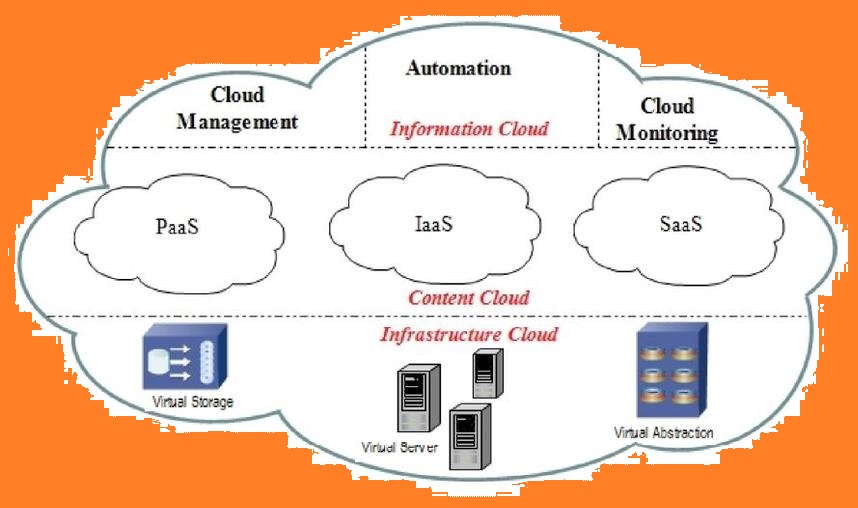
Web Services and Cloud Service Models
Web services can help provide cloud services in different ways.
Infrastructure as a Service
Applications can use APIs to control computing, networking, and storage resources.
Platform as a Service
Developers can interact with cloud systems through APIs and services for software deployment, da databas es and deve,lopment tools.
Software as a Service
Users get the right of access to complete applications through the internet. Web offerings and APIs can also permit SaaS programs to talk with different systems.
SaaS applications are hosted with the aid of using cloud carriers and introduced to customers over a network.
Web Services vs Traditional Applications
Traditional programs can also function independently and keep or manage information locally. Web offerings are designed to show particular functionality that applications can get access over a community.
| Traditional Application | Web Service |
|---|---|
| Often operates independently | Designed for communication |
| May depend on local resources | Can access remote resources |
| Limited integration | Supports application integration |
| Functionality may be isolated | Functionality can be exposed as a service |
| Less suitable for distributed integration | Suitable for distributed systems |
Modern cloud applications frequently integrate multiple services in a wayof rway offg as one massive standalone software.
Challenges of Web Services in Cloud Computing
Although internet offerings provide many benefits, similarly they have worrying conditions.
Security: Network-available services want to be protected against unauthorized access and attacks
Performance: Network communication can introduce latency in contrast with network software program calls.
Reliability: If a required external provider becomes unavailable, structured programs can also be affected.
Data Privacy: Applications have to guard sensitive facts exchanged through offerings.
Service Management: Organizations want monitoring, authentication, authorization, versioning, and errors-coping with mechanisms.
Future of Web Services in Cloud Computing
Cloud computing is increasingly primarily based completely mostly on APIs, microservices,s and allocated applications. Web services will continue to play an important position in connecting these components.
Modern cloud-based architectures regularly use REST APIs, event-driven communication, containers, and microservices. Instead of constructing one large software program, developers can create smaller services that perform unique duties and talk with each other.
This technique can enhance flexibility and allow individual offerings to be advanced, deployed, and scaled independently.
Conclusion
Web services in cloud computing offer a standardized way for packages and structures to talk over networks. They permit application software developed with advanced technology to exchange data and get right of entry to far off capability.
SOAP and REST are critical methods related to internet services. SOAP is based on agreement-oriented messaging, whilst REST offers a lightweight architectural method normally used for contemporary net and cloud APIs.
Web services help interoperability, reusability, scalability, and seamless integration. They are utilized in regions that incorporate banking, e-commerce, healthcare, cloud storage, journey, and business enterprise programs.
FAQ: About Web Services in Cloud Computing
1. What are internet offerings in cloud computing?
Web services are network-based software application services that allow applications to talk, exchange data, and use functionality through standardized interfaces.
2. What are the number one styles of net offerings?
The generally referred-to types are SOAP-based web services and RESTful web services.
3. What is SOAP in cloud computing?
SOAP is a messaging protocol that generally uses XML to exchange information amongst programs.
4. What is REST in cloud computing?
REST is an architectural style for designing client-server applications. RESTful services usually use HTTP methods such as GET, POST, PUT T, T and DELETE.
5. What are the benefits of internet services?
Major benefits encompass interoperability, platform independence, language independence, reusability, scalability, a whole lot much less difficult integration, and a more straightforward way of getting access.
6. What is the distinction amongst an API and an internet carrier?
An API is an interface that permits software application components to communicate. An internet provider is a community-to-be-had issuer that typically exposes functionality via network technology. An internet service can consequently be considered one form of API-basedtotaly integration technique.